
"tree suitability"
10000 article(s) found

Coffee knowledge the growth habits of Coffee
Coffee is a kind of drink that gives the public the impression that it is black, bitter, sleepless and excited. The coffee beans we see in the coffee shop are tea-brown, which belongs to roasted coffee beans, while the color of the coffee liquid is amber. Coffee comes from coffee beans, which are harvested and processed from the fruit of trees.] Distribution of coffee: coffee

Are Ethiopian coffee beans suitable for hand brewing? How do Ethiopian coffee taste good?
Professional coffee knowledge exchange more coffee bean information please follow the coffee workshop (Wechat official account cafe_style) Ethiopia Jima Akmanu calendar solarization (organic certification) Ethiopia Jimma Akmel Nuri natural (organic certificated) producer: Ethiopia Ethiopia producing area: Limu Kosa; Jima Jimma producer

Variety types of coffee trees
BORBON originated from La Reunion, a small island near Europe-Mozambique. It is adjacent to Madagascar, commonly known as Spice Island. Because BORBON tree is sensitive to insects and bacteria, it is a vulnerable tree species, but its yield is high, so it needs special care. It is more suitable for planting in high latitude mountain areas, but it is more difficult to resist diseases when planting in low land.

The global distribution of coffee the growth habits of coffee
Coffee is a kind of drink that gives the public the impression that it is black, bitter, sleepless and excited. The coffee beans we see in the coffee shop are tea-brown, which belongs to roasted coffee beans, while the color of the coffee liquid is amber. Coffee comes from coffee beans, which are harvested and processed from the fruit of trees.] Distribution of coffee: coffee

Species of coffee trees in Ethiopia
The Arabica coffee tree, which originated in Ethiopia, accounts for 70% of the world's output of coffee beans; the world-famous Blue Mountain Coffee and Mocha Coffee are almost all Arabica species. The coffee trees planted in Arabica are suitable for growing in high mountains with large temperature difference between day and night, as well as soils with low humidity and good drainage; the ideal altitude is 500m ~ 2000 m, and the higher the altitude is, the better the quality is.

A brief introduction to the flavor, taste and aroma characteristics of Katim boutique coffee beans suitable for deep baking
Coffee is a semi-shaded tree species, it is recommended to establish a moderate shade degree of 3040%. In the site environment of growing coffee in our province, it is generally difficult to solve the problem of water conservancy and irrigation. the water season is in the dry season, and it is also the season to compete with other crops for water. It is not easy to rely on irrigation to meet the water demand in the coffee field. It is necessary to loosen the soil in time after the end of the rainy season and adopt dead objects on the ground.

Introduction to the planting conditions and types of coffee | what are the favorable conditions for coffee cultivation?
Professional coffee knowledge exchange more coffee bean information Please pay attention to coffee workshop (Wechat official account cafe_style) caffeine growth and planting climate factors are prerequisites for coffee planting and growth. Coffee trees are only suitable for growing in tropical and subtropical areas between 25 degrees north and south latitudes, which are often referred to as coffee growing belts or coffee producing areas.

What natural conditions are needed to grow coffee trees? which countries are the most suitable for planting coffee trees?
In the coffee processing process, baking is the most difficult step, it is a kind of science, but also a kind of art. The baking process is divided into three stages: dehydration, in the early stage of baking, raw beans begin to absorb heat, and the internal water gradually evaporates. At this time, the color gradually changed from cyan to yellow or light brown, the silver skin began to fall off, and the faint smell of grass could be smelled. The main part of this stage

The planting conditions of coffee trees the types of coffee trees
The Robastian coffee tree, which originated in the Congo in Africa, accounts for about 20% of the world's production. 30%. Robasta coffee tree is suitable for planting in the lowlands below 500 meters above sea level, has strong adaptability to the environment, can resist bad climate, resist diseases and insect pests, and does not need much manual care during soil preparation, weeding and pruning, and can be allowed to grow in the wild. It is easy to cultivate.

What natural conditions do coffee trees need to grow?
The planting conditions of coffee trees the origin of coffee trees is in Ethiopia, Africa. In botany, coffee trees belong to the evergreen trees of the subgenus Rubiaceae, and coffee beans, commonly known as coffee beans, are the seeds of the fruit of coffee trees, just because they are shaped like beans, so they are called coffee beans. Climate is the decisive factor for coffee cultivation, and coffee trees are only suitable for growing in the tropics or subtropics.

What weather conditions are required for planting coffee trees
The planting conditions of coffee trees the origin of coffee trees is in Ethiopia, Africa. In botany, coffee trees belong to the evergreen trees of the subgenus Rubiaceae, and coffee beans, commonly known as coffee beans, are the seeds of the fruit of coffee trees, just because they are shaped like beans, so they are called coffee beans. Climate is the decisive factor for coffee cultivation, and coffee trees are only suitable for growing in the tropics or subtropics.

Where are coffee trees mainly planted? Is the planting belt of coffee trees mainly distributed in the north and south latitudes?
Professional coffee knowledge exchange more coffee bean information Please pay attention to the coffee workshop (Wechat official account cafe_style) Coffee trees are only suitable for growing in the tropics or subtropics, so the zone between latitude 25 degrees north and south is the most suitable for growing coffee. This coffee production zone is generally called a coffee belt or coffee area. The ideal planting condition of coffee tree is that the temperature is between 15 ℃ and 25 ℃.

Taste of Hawaiian Kona Coffee with suitable Climate introduction Fine Coffee beans Hawaiian Coffee beans
Kona coffee, Arabica, beautiful appearance, average neat bean shape, clear taste, medium mellow, slightly sour taste, strong aroma and long aftertaste. Kona coffee is divided into four grades, namely Extra Fancy, Fancy, Prime and Gr.No.1. Due to the low output and high production cost, the price of Kona in the market is catching up with the increasing demand for fine coffee.

Introduction to the planting method of Coffee Tree where is the origin of coffee tree
The origin of the coffee tree is Ethiopia in Africa. In botany, coffee trees belong to the evergreen trees of the subgenus Rubiaceae, and coffee beans, commonly known as coffee beans, are the seeds of the fruit of coffee trees, just because they are shaped like beans, so they are called coffee beans. Climate is the decisive factor for coffee cultivation. Coffee trees are only suitable for growing in the tropics or subtropics, so latitude 25 is south and north.
High-quality boutique coffee from Taiwan coffee, Mazu coffee
Follow the caf é (official Wechat account vdailycom) and found that Alishan Coffee, a small shop of its own, is grown in Arabica Coffee. This kind of coffee grows in a harsh environment. Taiwan is located in the subtropics, with high temperatures all the year round, and coffee trees like shade. If coffee trees are planted alone, they may be killed by strong sunlight, and the Ali Mountains are heavily forested.
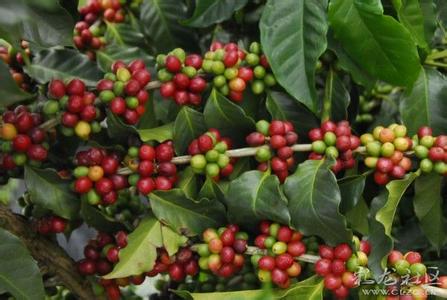
The most important type of coffee in the world-the distribution and growth habits of coffee
Coffee distribution: coffee trees grow in the tropical or subtropical regions of the tropical or subtropical regions with the equator as the center and between the latitudes of 25 degrees south and north. At present, coffee is produced in more than 60 countries, widely distributed in South America, Central America, the West Indies, Asia, Africa, Arabia, the South Pacific and Oceania. In terms of output, Pakistan, which accounts for the largest output in the world,

The original variety of coffee beans
At present, the most important coffee beans in the world mainly come from three original varieties: Arabica, Roberta and Liberia. The Arabica coffee tree, which originated in Ethiopia, accounts for 70% of the world's coffee production, and almost all the world-famous coffee varieties are Arabica species. Arabica coffee trees are suitable for growing in high mountains with large temperature difference between day and night, as well as low humidity and good drainage.

What kind of coffee do Arabica species, Robusta species and Liberian species represent respectively?
Arabica coffee trees originated from Arabica coffee trees in Ethiopia and account for 70% of the world's coffee bean production. The world-famous blue mountain caffeine and mocha coffee are almost all Arabica species. The coffee trees planted in Arabica are suitable for growing in high mountains with large temperature difference between day and night, and ten soils with low humidity and good drainage. The ideal altitude is 500m ~ 2000.
Coffee beans: coffee beans, coffee beans, coffee beans
At present, the most important coffee beans in the world mainly come from Arabica, Robersta and Liberia. Arabica coffee trees originating in Ethiopia account for 70% of the world's coffee production, and almost all of the world's famous coffee varieties are Arabica. Arabica coffee trees are suitable for growing in high mountains with large temperature differences between day and night, and low humidity and good drainage.

Can the coffee variety Robasta be roasted deeply?
Coffee varieties originated from Arabica coffee trees in Ethiopia, accounting for 70% of the world's coffee production, and almost all the world-famous coffee varieties are Arabica species. Arabica coffee trees are suitable for growing in high mountains with large temperature difference between day and night, as well as soils with low humidity and good drainage. The ideal altitude is 500m-2000 m. The higher the altitude, the better the quality, but because of disease resistance.